For your programme
Advance a programme.
Resolve molecular questions and develop useful chemistry, connecting scientific expertise with your existing evidence.
Explore programme collaboration
Kuano / Science, connected
Kuano combines quantum physics-based molecular design with an agent-enabled scientific platform for drug discovery and molecular innovation.
We work with small biotechs and chemistry discovery teams, pharmaceutical companies, CROs and other R&D organisations, from focused scientific questions to broader programmes and integrated capabilities.
For your programme
Resolve molecular questions and develop useful chemistry, connecting scientific expertise with your existing evidence.
Explore programme collaborationFor your organisation
Access selected Kuano tools and workflows, or work with us to develop scientific infrastructure within your organisation.
Explore the platformPartnerships
Scientific collaboration, selected capabilities, infrastructure and joint offerings.
Explore partnershipsWhere we contribute
You have compounds and experimental results, but important questions about models, binding or mechanism remain. Connect that evidence to interpretations you can test.
Your programme needs differentiated chemistry or a better explanation of molecular behaviour. Use scientific insight to guide the next designs and experiments.
Your teams need to apply scientific methods across projects. Bring tools, data and computation into coordinated workflows, with a deployment approach suited to your organisation.
The Kuano platform
Kuano scientists use the platform in their own work. It also provides a foundation for selected capabilities and infrastructure developed with clients.
Quantum Lens holds the scientific methods and workflows. Compute runs the work; the Database retains chemistry, context and experiment provenance.
Software agents coordinate steps across scientific tools, Compute and the project record, under scientist direction and review.
Our aim is to help specialist expertise support more programmes while making methods and analysis easier to share across discovery teams. Scientists retain control over assumptions and interpretation.
Scientific evidence
Design followed by experimental testing
Experimentally tested chemistry
Mechanistic insight informed new inhibitor chemistry, followed by experimental assessment.
Read the caseMechanistic design & testing
A transient reaction feature informed molecular design and experimentally tested inhibitor chemistry.
Read the caseInterpretation of existing evidence
Retrospective analysis
Quantum analysis examined covalent behaviour in the protein environment using published ligands.
Read the caseScientific focus
Investigate reaction pathways and transition states to identify opportunities for molecular design.
Examine reactivity alongside binding geometry and the molecular environment.
Understand why related compounds or targets behave differently, and use that insight to guide design.
Explore molecular dynamics, candidate binding sites and structural hypotheses against available evidence.
Research & updates
Read selected publications, funded research and company updates.
Explore publications and funded projects
Vid Stojevic joined a Birmingham panel exploring how pharma and AI companies can build effective partnerships.
Read the update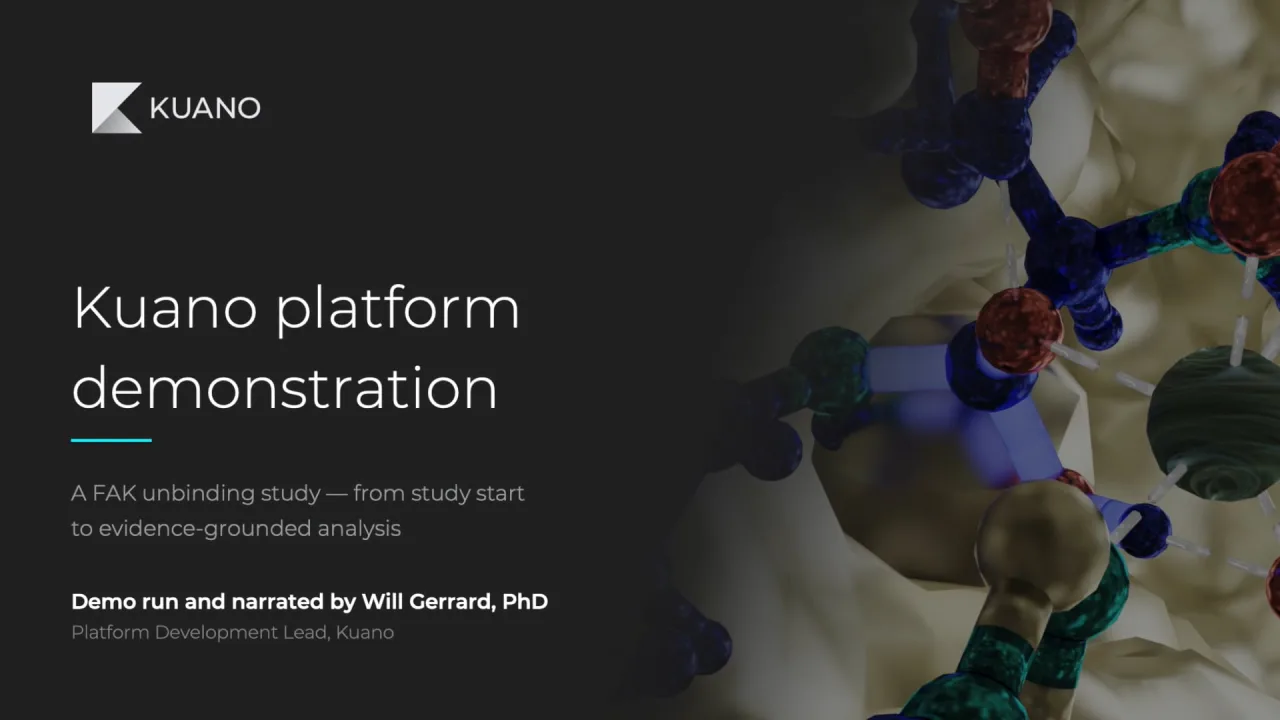
At Asia Bio Partnering Forum, Kuano showed how its agent-supported platform can help plan, run and analyse a computational study.
Read the update Watch the demo
Kuano joined the global biotech community in San Diego for discussions on computational approaches to drug discovery.
Read the update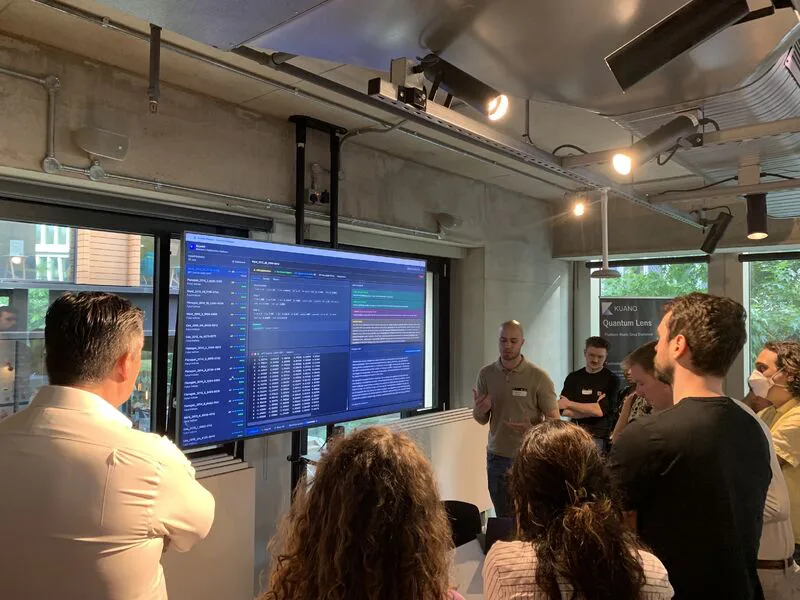
Our King’s Cross event brought together perspectives from pharma, AI, chemistry and investment, alongside a Kuano demonstration of covalent binder design workflows.
Read the update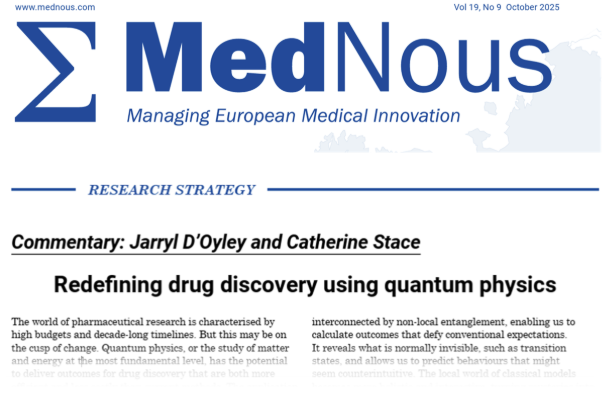
Kuano in MedNous! We’re thrilled to be featured in this month’s edition. You can read the article entitled ‘Redefining Drug Discovery using Quantum Physics’. At Kuano, we’re bringing quantum…
Read the update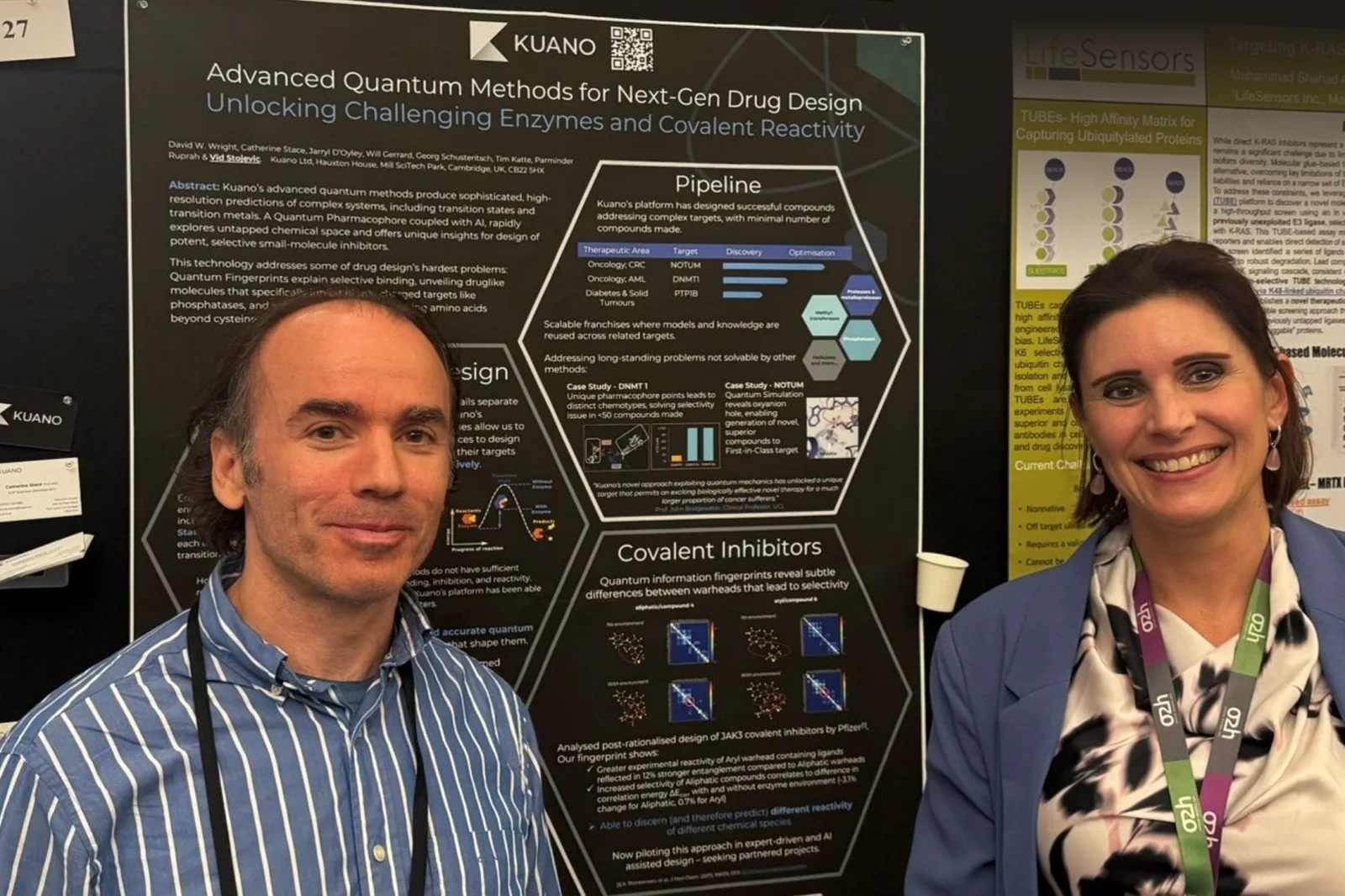
If you missed Kuano’s poster at Discovery On Target in Boston last month, it is now available on our website here.
Read the updateWork with Kuano
A contribution shaped around your team.
Agree the scientific question, resources and responsibilities. Work alongside your own specialists and experimental partners, with scope to develop the collaboration as the evidence grows.